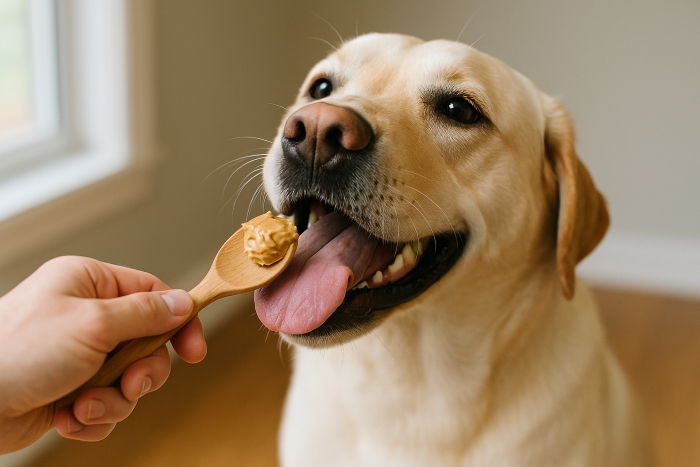
We’ve all done it: opened a jar of peanut butter to take a pill, and our dog’s eyes light up with anticipation. Peanuts and peanut butter are classic high-value treats for dogs. But as you’re about to share a nutty snack, a crucial question arises: “Can dogs eat peanuts?”
The short answer is yes, most dogs can eat peanuts safely, but this comes with some very important exceptions. Not all nuts are created equal, and how peanuts are prepared makes all the difference between a healthy treat and a health hazard.
This guide will give you a simple safety checklist for peanuts and reveal which other common nuts are a dangerous, or even toxic, no-go for your furry friend.
The 3-Point Safety Check Before Feeding Peanuts
Before you offer any peanuts or peanut butter, run through this mental checklist every single time.
1. Are They Plain, Unsalted, and Unseasoned?
This is the most important rule. Dogs should only eat plain, raw or dry-roasted peanuts. Many packaged peanuts for humans are loaded with salt, spices, and other flavorings that can upset a dog’s stomach and lead to sodium ion poisoning in large amounts.
2. Have the Shells Been Removed?
Peanut shells are not toxic, but they are fibrous and difficult to digest. They can pose a serious choking hazard, especially for smaller dogs, and can cause an intestinal blockage. Always ensure the peanuts are completely shelled.
3. Does the Peanut Butter Contain Xylitol?
This is a life-or-death check. Some brands of peanut butter, especially “sugar-free” or “light” versions, contain Xylitol, an artificial sweetener that is extremely toxic to dogs. Always read the ingredient label carefully before buying or sharing peanut butter.
The “Bad Nuts”: Which Nuts Are Dangerous for Dogs?
It’s a common mistake to think all nuts are the same. Some are far more dangerous than others.
- ☠️ Highly Toxic – Macadamia Nuts: These are one of the most dangerous nuts for dogs. Even a small amount can cause weakness, vomiting, tremors, and hyperthermia (overheating). Never let your dog eat macadamia nuts.
- ⚠️ Use Extreme Caution – Almonds, Walnuts, Pecans: While not as toxic as macadamia nuts, these nuts are best avoided. They are high in fat, which can lead to vomiting, diarrhea, and a painful condition called pancreatitis. Almonds can also be a choking hazard, and walnuts can contain fungi that are harmful to dogs.
It is always safer to stick with plain peanuts if you choose to give your dog a nutty treat.

Portion Control and Other Potential Risks
Like all treats, moderation is key. Peanuts are high in fat, which can contribute to weight gain if given too frequently. Remember the 10% rule: treats should only make up about 10% of your dog’s daily caloric intake.
While rare, some dogs can also have a nut allergy. If you notice any signs of an allergic reaction (like itching, swelling, or difficulty breathing) after feeding peanuts, stop immediately and contact your veterinarian.
Conclusion: A Safe Treat, With Careful Rules
So, can dogs eat peanuts? Yes, but only if they are plain, unsalted, and shelled, and given in moderation. Peanut butter can also be a great treat, as long as you’ve confirmed it is free of xylitol.
However, the world of nuts is a risky one for our dogs. To keep your pet safe, it’s best to avoid all other nuts, especially the highly toxic macadamia nut. By following these simple rules, you can continue to use this popular treat to delight your dog without worry.

Frequently Asked Questions (FAQ)
Q1: What’s the best type of peanut butter for dogs?
A: The best peanut butter is one with the simplest ingredients, ideally just peanuts. Look for natural or organic brands with no added salt, sugar, or oils, and always confirm there is no xylitol.
Q2: What should I do if my dog eats a macadamia nut?
A: This is an emergency. Contact your veterinarian or an animal poison control center immediately, even if your dog seems fine. Prompt action is crucial.
Q3: How many peanuts can I give my dog?
A: For a medium-sized dog, 4-5 plain peanuts are a reasonable treat. For a small dog, 1-2 peanuts would be more appropriate. It should be an occasional snack, not a daily staple.