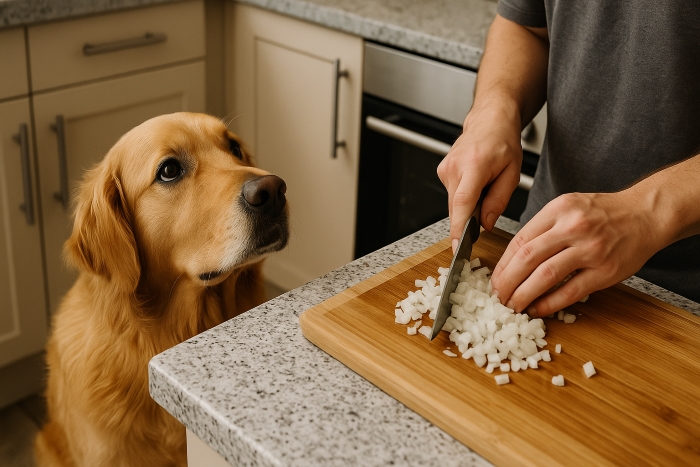
You’re cooking a delicious meal, and a small piece of onion falls to the floor. Your dog, ever the hopeful sous-chef, gobbles it up before you can react. A common question immediately flashes through your mind: “Can dogs eat onions?”
It’s a simple question with a very serious answer. No, dogs absolutely cannot eat onions. Unlike some human foods that are safe in moderation, onions in all forms—raw, cooked, powdered, or dehydrated—are toxic to dogs and can cause severe health problems.
This guide will explain exactly why onions are so dangerous, where they hide in our food, and what you need to do to keep your beloved pet safe.
The Science: Why Are Onions Poisonous to Dogs?
The toxicity of onions comes from a compound called N-propyl disulfide. Humans can easily digest this compound, but a dog’s body cannot.
When a dog ingests N-propyl disulfide, it attaches to the oxygen-carrying molecules in their red blood cells. This causes oxidative damage, leading the body to mistake these cells as invaders and destroy them. This destruction of red blood cells is a serious condition called hemolytic anemia.
Without enough red blood cells to carry oxygen from the lungs to the rest of the body, a dog’s organs can’t function properly, leading to a medical emergency.
Hidden Dangers: Onions Are in More Foods Than You Think
The most significant risk isn’t just a raw onion. Onions are a staple ingredient used to add flavor to countless human foods. Your dog could be poisoned by licking a plate or eating leftovers containing:
- Soups and Broths
- Sauces and Gravies
- Pizza and Pasta Dishes
- Stir-fries and Casseroles
- Seasoned Meats
- Baby Food
- Onion Rings and other fried snacks
Important Note: This toxicity applies to all members of the allium family, including garlic, leeks, chives, and shallots. Garlic is even more potent than onions.
Symptoms of Onion Toxicity in Dogs
If your dog has eaten onions, symptoms may not appear immediately. It can take 2-4 days for the signs of hemolytic anemia to become noticeable. You must watch for:
- Lethargy, weakness, or seeming unusually tired
- Pale or whitish gums
- Reddish or brown-colored urine (a key sign)
- Vomiting and diarrhea
- Decreased appetite
- Elevated heart rate and panting
If you notice any of these signs, especially pale gums or discolored urine, contact your veterinarian immediately.

How Much Onion is Toxic?
Toxicity is dose-dependent, but the rule of thumb is that poisoning can occur if a dog ingests more than 0.5% of its body weight in onions at one time.
However, it’s not just about a single large dose. Regularly feeding your dog small amounts of onion-laced food can cause cumulative damage and lead to anemia over time. Because the risk is so high, the safest amount of onion for your dog is zero.
Emergency Plan: What to Do if Your Dog Eats Onions
- Assess the Situation: Try to determine how much and what form of onion your dog ate (e.g., a slice of raw onion, a spoonful of sauce).
- Contact Your Vet Immediately: Call your veterinarian or an emergency animal hospital right away. Do not “wait and see” if symptoms appear. Provide them with your dog’s weight and as much detail as you can about the ingestion.
- Follow Veterinary Advice: Your vet may advise you to bring your dog in immediately. They might induce vomiting if the ingestion was recent and can provide supportive care, such as IV fluids or even blood transfusions in severe cases.
- [Internal Link Suggestion: Read our guide on other toxic foods like Xylitol and Grapes.]
Conclusion: When in Doubt, Leave it Out
So, can dogs eat onions? The answer is a clear and resounding no. The risk of developing a life-threatening condition like hemolytic anemia is far too great.
The best way to protect your dog is through prevention. Be mindful when cooking, secure your trash, and resist the urge to share table scraps that might contain hidden onions or garlic. By staying informed, you can ensure your kitchen remains a safe space for your furry family member.

Frequently Asked Questions (FAQ)
Q1: What if my dog ate a tiny piece of cooked onion?
A: A single, tiny piece is unlikely to cause serious poisoning in a large dog, but it’s still not ideal. The best course of action is to monitor your dog closely for any symptoms and call your vet for their professional opinion, as they know your dog’s health history.
Q2: Is onion powder as dangerous as raw onion?
A: Yes, and it can be even more dangerous because it’s highly concentrated. A small amount of onion powder contains a much larger amount of the toxic compound than the same volume of fresh onion.
Q3: Are there any safe types of onions for dogs?
A: No. All members of the allium family, including white, yellow, and red onions, as well as green onions, shallots, leeks, chives, and garlic, are toxic to dogs.