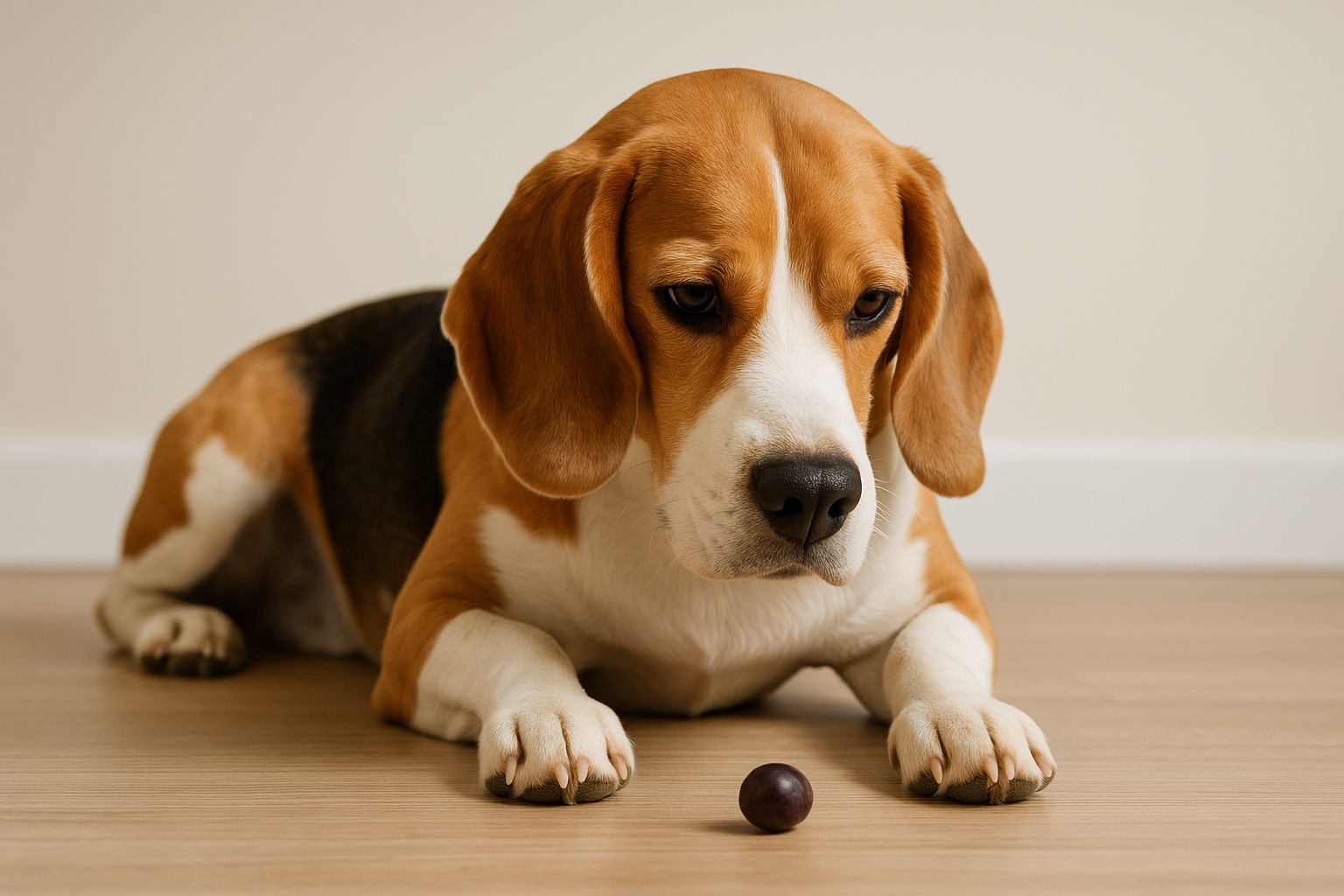
It’s a moment of pure panic for any owner when their dog ate one grape. That’s what I told myself as my heart leaped into my throat. My dog had just snagged a rogue grape off the kitchen floor with lightning speed. But as any responsible dog owner eventually learns, even a single grape is a cause for immediate action. Grapes—and their dried counterparts like raisins and currants—are known to be highly toxic to dogs.
For years, the reason was a frustrating mystery. But now we have answers. In this guide, we’ll dive into the latest science, what symptoms to watch for, the immediate steps you must take, and how to protect your dog moving forward. This is essential reading for all dog owners, new and seasoned alike, especially if you’re currently worried because your dog ate one grape.
The Danger of Grapes: The Tartaric Acid Connection
For decades, the exact substance in grapes that harmed dogs was unknown, making the danger feel random and terrifying. However, recent veterinary research has identified the likely culprit: tartaric acid.
Grapes and raisins are naturally high in this compound. While humans process it easily, dogs are uniquely sensitive to it. In susceptible canines, tartaric acid can trigger vomiting, diarrhea, and in the most severe cases, sudden and catastrophic kidney failure. The concentration of tartaric acid varies wildly depending on the grape’s type, ripeness, and growing conditions. This explains everything. It’s why one dog might eat a handful and be fine, while another dog of the same size suffers life-threatening consequences from just one. It’s not a predictable poison; it’s a game of Russian roulette with your dog’s health.
What Happens After a Dog Ate One Grape?
The toxic reaction can begin within hours. Symptoms typically manifest within 6 to 12 hours and are signs that the body is trying to expel the toxin and the kidneys are under stress.
Early Signs (Within 1-12 Hours):
- Vomiting or retching: This is often the very first sign.
- Lethargy or unusual stillness
- Loss of appetite
- Diarrhea
- Abdominal pain (your dog may flinch or cry out if you touch their belly)
- Dehydration (check for a dry nose, pale gums, or skin that doesn’t snap back when gently pinched)
Advanced Signs of Kidney Distress (After 24 Hours):
- A dramatic increase in thirst and urination as the kidneys struggle to flush the toxin.
- A sudden decrease in urination or a complete stop (anuria). This is a sign of acute kidney failure and is a grave emergency.
- Tremors, seizures, or coma in the most severe cases.
Step-by-Step Emergency Action Plan
Do not wait for symptoms to appear after your dog ate one grape. By the time they do, damage may already be underway. Treat this as a true emergency.
- Secure Your Dog & Call for Help: Immediately get your dog away from any other grapes. Then, call your veterinarian, a 24/7 emergency animal hospital, or the ASPCA Animal Poison Control Center at (888) 426-4435. Have this information ready: your dog’s approximate weight, your best guess of how many grapes were eaten, and what time it happened.
- DO NOT Induce Vomiting Unless Instructed: Never give your dog hydrogen peroxide or anything else to induce vomiting without explicit direction from a veterinary professional. Improperly inducing vomiting can lead to serious complications, including aspiration pneumonia.
- Follow Your Vet’s Advice: They will tell you whether to monitor at home or to bring your dog in immediately. If they say come in, go.
How Veterinarians Respond: The Gold Standard of Care
Your veterinary team will immediately begin a process called decontamination and supportive care. This information is based on established veterinary protocols, such as those outlined by leaders like VCA Animal Hospitals.
- Induce Vomiting: At the clinic, they will use a safe and effective medication to make your dog vomit and clear their stomach.
- Administer Activated Charcoal: This black liquid is a “toxin binder.” It attaches to any remaining tartaric acid in the digestive tract and prevents it from being absorbed.
- Start IV Fluids (Diuresis): This is the most critical step. Your dog will be hospitalized and put on intravenous fluids for 24-48 hours. This fluid therapy helps to flush the toxins from the system while protecting the kidneys from damage.
- Monitor with Bloodwork: They will conduct blood and urine tests to monitor key kidney values (like BUN and creatinine). If these values remain stable, it’s an excellent sign that you’ve averted a crisis.
Age-Specific Considerations: Why Every Dog is at Risk
Puppies (Under 1 Year) A puppy’s kidneys and organs are still developing, making them incredibly vulnerable. Their boundless curiosity also puts them at a higher risk. For a puppy, a situation where they ate one grape should be considered a major toxic event.
Adult Dogs (1–7 Years) Even a healthy adult dog with strong kidneys is not safe. The toxicity is not dose-dependent; it is based on individual sensitivity. Don’t let stories of other dogs being “fine” lull you into a false sense of security.
Senior Dogs (7+ Years) Older dogs often have naturally declining organ function. An underlying, even undiagnosed, kidney issue can turn a grape ingestion from a serious problem into a fatal one.
Why One Grape Is Never “Just One Grape”
It’s tempting to minimize the risk, but yes—a single grape is more than enough to be dangerous. The risk from even one grape is serious because:
- The toxic dose is unknown and unpredictable.
- The concentration of tartaric acid is a lottery.
- Your dog’s individual sensitivity is a mystery until it’s too late.
Even if your dog seems fine, seeking immediate veterinary care is the only way to ensure internal damage isn’t silently occurring after a dog ate one grape.
Personal Story: The Grape Incident
It happened so fast. I dropped a single grape, and before I could even bend down, my dog, Luna, had darted over and gulped it down. She looked so pleased. I, on the other hand, went into full-blown panic mode. I called the emergency vet within minutes. They didn’t hesitate: “Bring her in now.”
Luna stayed at the clinic for 24 hours on IV fluids. It was a stressful and expensive day. Thankfully, her kidney values stayed perfectly normal. But I learned a powerful lesson about prevention and the importance of immediate action.
Preventing Future Accidents
- No Grapes Allowed: The easiest rule is to not have grapes or raisins in the house. If you must have them, store them in a sealed container high up in the refrigerator.
- Educate Everyone: Make sure every family member and visitor knows that grapes are forbidden.
- Check Ingredients: Be mindful of hidden sources like trail mix, granola bars, and some baked goods.
- Practice the “Leave It” Command: A well-trained “leave it” command can be a literal lifesaver.
Safe and Healthy Fruit Alternatives
If your dog has a sweet tooth, there are plenty of safe fruits you can share in moderation:
- Blueberries (packed with antioxidants)
- Apple slices (remove all seeds and the core)
- Banana chunks
- Seedless watermelon
- Strawberries
These make wonderful training rewards or can be frozen for a refreshing summer treat.

- Grape Toxicity Case Studies (https://www.ncbi.nlm.nih.gov/pmc/articles/PMC5708354/)
- ASPCA Poison Control Center (https://www.aspca.org/pet-care/animal-poison-control)
- PetMD on Grape Toxicity (https://www.petmd.com/dog/emergency/common-emergencies/e_dg_grape_raisin_toxicity)
- AKC: Toxic Foods for Dogs (https://www.akc.org/expert-advice/nutrition/human-foods-dogs-can-and-cannot-eat/)
- VCA Hospitals Guide (https://vcahospitals.com/know-your-pet/grape-or-raisin-toxicity-in-dogs)