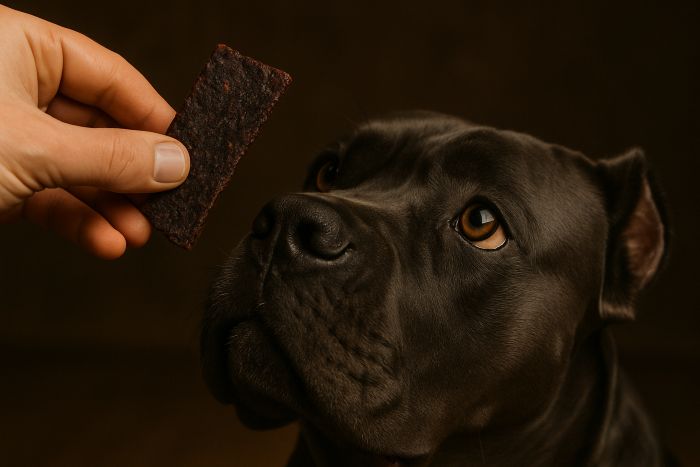
That savory, smoky aroma of beef jerky fills the room. You tear off a piece for yourself, and suddenly, you feel a familiar presence by your side. Two big, hopeful eyes are staring up at you, a gentle tail thudding against the floor. It’s a scene every dog owner knows well. In that moment, the temptation to share your delicious snack is overwhelming. It’s just dried meat, right? What harm could a small piece of human jerky for dogs do?
Unfortunately, this common assumption hides a significant risk. While it seems like a simple, protein-packed treat, the jerky made for human consumption is packed with ingredients that can be incredibly harmful, and in some cases, toxic to our canine companions. Giving your dog a piece of your jerky isn’t a harmless treat; it’s a gamble with their health.
This ultimate guide will break down the critical differences between human jerky and dog jerky, uncover the 5 hidden dangers lurking in your favorite snack, and show you how to choose safe, healthy alternatives for your best friend.
Human vs. Dog Jerky: A Side-by-Side Comparison
At a glance, they look almost identical. But beneath the surface, the formulation of human jerky and dog jerky is worlds apart. The primary difference lies in the seasoning and preservation methods, which are tailored to two very different digestive systems.
This table clearly shows why a simple swap is not so simple. The ingredients that make human jerky for dogs so flavorful for us are the very things that make it a health risk for them.
The 5 Hidden Dangers of Human Jerky for Dogs
Let’s dive deeper into the specific reasons why you should keep your personal jerky stash away from your pup. Understanding these risks is the first step to protecting them.

Danger #1: Sky-High Sodium Levels
Salt is the number one enemy in human jerky when it comes to our dogs. It’s used generously as both a flavor enhancer and a preservative. While dogs do need a small amount of sodium to function, the levels in human jerky are excessive and can lead to serious health issues, including:
- Salt Poisoning (Hypernatremia): Symptoms include extreme thirst, vomiting, diarrhea, lethargy, and in severe cases, seizures and damage to the kidneys.
- Dehydration: The excess salt draws water out of your dog’s cells, leading to rapid dehydration.
- Increased Blood Pressure: Just like in humans, a high-sodium diet can contribute to hypertension, putting a strain on your dog’s heart and other organs.
A single stick of human jerky can contain more than the recommended daily sodium intake for a medium-sized dog.
Danger #2: Toxic Spices and Seasonings
This is arguably the most immediate and severe danger of human jerky for dogs. Many of our favorite jerky flavors—like peppered, teriyaki, or smoky BBQ—are loaded with ingredients from the Allium family, which are highly toxic to dogs.
- Onion and Garlic Powder: These are extremely common in jerky marinades. They can cause oxidative damage to a dog’s red blood cells, leading to a serious condition called hemolytic anemia. Even in small, repeated doses, they can cause significant harm. According to the , all parts of the onion plant, including powdered forms, are toxic.
- Black Pepper and Chili Powder: While not toxic, these can cause severe stomach upset, irritation, and gastritis in dogs.
Danger #3: Unsafe Preservatives and Additives
To keep jerky shelf-stable, manufacturers often use chemical preservatives and flavor enhancers that are not suitable for canine consumption.
- Sodium Nitrite: Used to cure meat and prevent bacterial growth, it can be harmful to dogs if ingested in large amounts.
- MSG (Monosodium Glutamate): A common flavor enhancer that can cause adverse reactions in sensitive dogs, including vomiting or hyperactivity.
- Artificial Sweeteners: Some “low-sugar” jerky might even contain sweeteners like , which is extremely toxic to dogs and can cause a rapid, life-threatening drop in blood sugar and liver failure.
[The Dangers of Xylitol in Dog Treats] for more information, https://vcahospitals.com/know-your-pet/xylitol-toxicity-in-dogs).
Danger #4: High and Unhealthy Fat Content
The cuts of meat used for human jerky are often chosen for flavor, not for lean nutrition. This can result in a high fat content, which poses a risk for pancreatitis. Pancreatitis is a painful and potentially fatal inflammation of the pancreas, often triggered by a sudden intake of high-fat foods. It’s a serious medical emergency that requires immediate veterinary care.
Danger #5: Tough Texture and Choking Hazards
Human jerky is designed to be tough and chewy. For a dog, especially a small breed or an excited eater, this presents two problems:
- Choking Hazard: A dog might try to swallow a large, tough piece whole, causing it to become lodged in their throat.
- Digestive Blockage: If a large piece is swallowed, its tough texture can make it difficult to digest, potentially leading to an intestinal blockage.
Help! My Dog Already Ate Human Jerky – What Do I Do?
First, don’t panic. The severity of the risk depends on the amount and type of jerky consumed and the size of your dog.
- Identify the Ingredients: If possible, check the packaging of the jerky your dog ate. Look for onion powder, garlic powder, or xylitol. This information will be vital for your vet.
- Estimate the Amount: Try to figure out how much your dog ate. A tiny crumb is less concerning than a whole stick.
- Contact Your Veterinarian Immediately: This is the most important step. Call your vet or an emergency pet poison hotline. Inform them of the ingredients, the amount consumed, and your dog’s weight. They will give you the most accurate advice, which may range from monitoring at home to inducing vomiting or bringing them in for immediate care.
How to Choose a Genuinely Safe Dog Jerky
The good news is that there are thousands of fantastic, safe jerky treats made specifically for dogs! When shopping, you become your dog’s personal nutritionist. Here’s what to look for on the label:
- Single, Recognizable Protein Source: The first ingredient should be simple, like “Chicken Breast,” “Beef,” or “Salmon.”
- Limited Ingredients: The fewer ingredients, the better. A good jerky has meat and maybe a natural preservative, and that’s it.
- Made in a Reputable Country: Look for treats made in countries with high food safety standards (e.g., USA, Canada, UK, South Korea).
- No “Bad Stuff”: Explicitly check for no added salt, sugar, artificial colors, flavors, or preservatives. Absolutely no onion or garlic powder.
- Grain-Free (Optional): If your dog has sensitivities, a grain-free option is best.

The Ultimate Solution: A Simple DIY Dog Jerky Recipe
The safest and most cost-effective way to treat your dog is to make jerky yourself! It’s surprisingly easy. You control 100% of the ingredients.
Ingredients You’ll Need:
- 1 lb (about 450g) of lean meat (boneless/skinless chicken breast, lean beef round, or turkey breast)
Step-by-Step Instructions:
- Prep the Meat: Trim off any visible fat. For easier slicing, place the meat in the freezer for 1-2 hours until it’s firm but not frozen solid.
- Slice Thinly: Slice the meat against the grain into very thin strips, about 1/8 inch (3mm) thick. The thinner the slice, the faster it will dehydrate.
- Dehydrate:
- Oven Method: Lay the strips in a single layer on a wire rack placed on a baking sheet. Set your oven to its lowest possible temperature (usually 140-170°F or 60-75°C). Prop the oven door open slightly with a wooden spoon to allow moisture to escape. Bake for 4-8 hours, flipping halfway through, until the jerky is dry and leathery.
- Dehydrator Method: Place strips on dehydrator trays and follow the manufacturer’s instructions for making meat jerky.
- Cool and Store: Let the jerky cool completely. It will become harder as it cools. Store it in an airtight container in the refrigerator for up to two weeks.
Frequently Asked Questions (FAQ)
Q: Can my dog eat teriyaki or peppered jerky? A: Absolutely not. Teriyaki jerky contains high levels of sugar and often soy sauce (sodium), plus it may contain garlic and ginger. Peppered jerky can cause significant stomach upset.
Q: Is organic human jerky safe for dogs? A: Not necessarily. “Organic” refers to how the ingredients were grown, not what the ingredients are. An organic jerky can still contain organic onion powder and high levels of organic salt, which are still dangerous.
Q: What about just a tiny piece of human jerky for my dog? A: It’s not worth the risk. For a very small dog, even a “tiny piece” can contain a harmful dose of sodium or spices. It’s best to stick to treats formulated specifically for them.
Conclusion: Stick to a Safer Snack
The momentary joy of sharing a piece of your jerky is not worth the potential for a serious health emergency. The high salt, dangerous seasonings, and other additives make human jerky for dogs a definitively unsafe treat.
Instead, empower yourself as a pet parent by choosing high-quality, dog-specific jerky or by trying your hand at the simple and rewarding process of making your own at home. Your dog’s health and safety are the ultimate reward, and a treat you can share without worry is the best kind of treat there is.