As a loving pet owner, you’d do anything to keep your furry friend safe. You carefully choose their food, secure your home, and shower them with affection. But what if a deadly danger is hiding in plain sight, disguised as a “healthy” human treat?
Enter xylitol.
This common sugar substitute, found in countless “sugar-free” products, is perfectly safe for humans but acts as a potent, fast-acting poison for dogs. Understanding the threat of xylitol and dogs is not just helpful advice—it’s critical knowledge that could save your dog’s life.
What Exactly is Xylitol?
Xylitol is a sugar alcohol, a type of carbohydrate that tastes sweet but has fewer calories than regular sugar. Because of this, it has become an extremely popular ingredient in health-conscious and diabetic-friendly products, from candy and gum to peanut butter and toothpaste. While it offers benefits for people, the story is tragically different for our canine companions.
Why is Xylitol So Dangerous for Dogs?
The danger lies in how a dog’s body metabolizes xylitol compared to a human’s. The difference is dramatic and life-threatening.
- In Humans: The human pancreas doesn’t recognize xylitol as real sugar, so it doesn’t trigger the release of insulin.
- In Dogs: A dog’s body cannot tell the difference. When a dog consumes xylitol, their system mistakes it for a massive sugar surge and the pancreas responds by releasing a catastrophic amount of insulin.
This leads to a two-fold attack on a dog’s system:
- Severe Hypoglycemia (Rapid Blood Sugar Drop): This flood of insulin causes the dog’s blood sugar levels to plummet dangerously low. This can happen within 10-60 minutes of ingestion and can lead to disorientation, seizures, collapse, and even a coma.
- Acute Liver Failure: In addition to the blood sugar crisis, higher doses of xylitol can lead to acute liver necrosis, where the liver cells begin to die. This is an often irreversible and fatal condition that can develop within hours or a few days after ingestion.
Symptoms of Xylitol Poisoning in Dogs
If you suspect your dog has eaten something with xylitol, you must act immediately. Time is critical. According to the Pet Poison Helpline, these are the signs to watch for:
- Sudden vomiting
- Weakness or lethargy
- Stumbling or difficulty walking (appearing “drunk”)
- Depression or disorientation
- Tremors or seizures
- Collapse or loss of consciousness
Symptoms of liver failure may not appear for 2-3 days and can include jaundice (yellowing of gums and skin), continued vomiting, and black, tarry stools.

The Hidden Danger: Where is Xylitol Hiding?
This is the most frightening part: xylitol isn’t just in obvious places. You must become a label-reader. Pay close attention to any product labeled “sugar-free,” “low sugar,” “keto-friendly,” or “naturally sweetened.”
Here are some common culprits where the link between xylitol and dogs becomes a real threat:
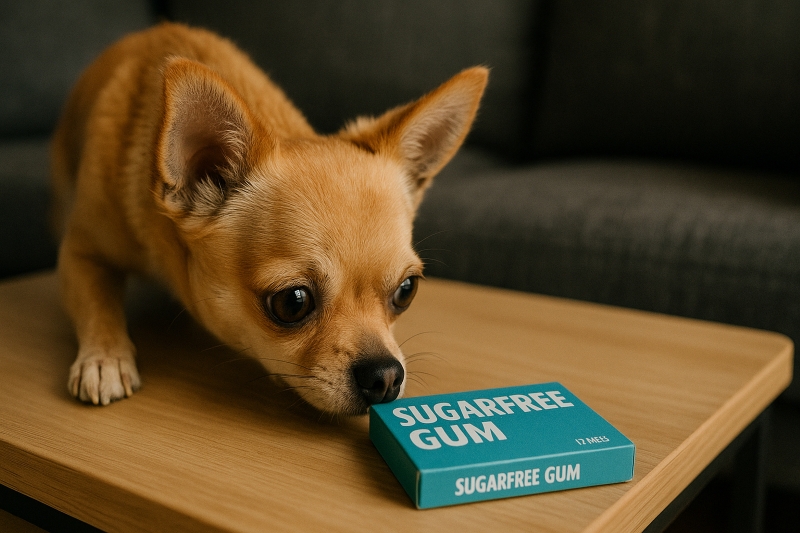
- Sugar-Free Gum & Mints: This is the most common source of canine xylitol poisoning.
- Peanut Butter: Some brands, especially “low sugar” or “natural” varieties, use xylitol. Always check the label before sharing!
- Dental Products: Human toothpaste and mouthwash often contain xylitol.
- Baked Goods & Candy: Sugar-free cookies, pastries, and hard candies.
- Medications & Vitamins: Chewable vitamins, liquid medications, and melatonin supplements.
- “Skinny” or Diet Products: Light ice cream, sugar-free puddings, and yogurts.
- Cosmetic Products: Some lotions and face creams contain small amounts.

Emergency Action Plan: What to Do If Your Dog Eats Xylitol
If you know or even suspect your dog has ingested xylitol, it is a medical emergency.
- ACT IMMEDIATELY. Do not “wait and see.” The faster you act, the better the prognosis.
- CALL YOUR VETERINARIAN or the nearest 24/7 Animal Emergency Hospital right away. Tell them what your dog ate, how much, and when.
- DO NOT INDUCE VOMITING unless specifically instructed to do so by a veterinary professional.
- Follow your vet’s instructions precisely. They will likely tell you to bring your dog in immediately for blood work, monitoring, and supportive care like IV fluids with dextrose

Conclusion: Vigilance is Your Best Defense
The relationship between xylitol and dogs is a stark reminder that what’s safe for us can be deadly for them. The best way to protect your dog is through prevention. Read every label, secure your pantry and purse, and educate your friends and family about this sweet poison.
Sharing this information with other dog owners is a powerful way to prevent a tragedy. Awareness is the first step in prevention, and you could save a life.
Frequently Asked Questions (FAQ)
Q1: How much xylitol is toxic to a dog?
A: The toxic dose is very low. A dose of just 0.1 grams of xylitol per kilogram of body weight can cause life-threatening hypoglycemia. A single piece of sugar-free gum can be enough to poison a small dog.
Q2: Can a dog survive eating xylitol?
A: Yes, but survival depends entirely on how quickly they receive aggressive veterinary treatment. The prognosis is good if hypoglycemia is treated early and the dose was not high enough to cause liver failure.
Q3: Are other sugar alcohols like erythritol also dangerous?
A: While xylitol is uniquely toxic, other sugar alcohols like erythritol, sorbitol, and maltitol can cause gastrointestinal upset (like gas and diarrhea) in dogs but are not known to cause the deadly insulin release or liver failure that xylitol does.